Best Cups for Babies & Toddlers
If you’ve ever gone down a rabbit hole trying to find the “best” cup for your baby… you’re not alone.
There are a lot of options. And a lot of strong opinions. So let me simplify this for you:
There is no single “best” cup.
What actually matters is helping your child build the skills they need to drink independently—without turning it into a battle or overthinking every purchase. Once you embrace that, the options get a whole lot less overwhelming.
When to Introduce Cups
Around 6 months—when you start solids—you can begin offering small amounts of water and introducing cups.
This isn’t about hydration. Your baby is still getting what they need from breastmilk or formula.
This stage is about learning. There’s no need to choose one way or wait for the “perfect time.” Exposure is what builds the skill. And just so you’re prepared—it’s going to be messy. There will be spills. Some sputtering. Probably a lot of water ending up on the tray instead of in your baby’s mouth.
That’s not a problem. That’s practice.
The Two Types of Cups You Really Need to Think About
If you take one thing from this post, let it be this: You only need to focus on open cups and straw cups. That’s it. Especially in the beginning.
Open Cups
Why I Recommend Starting with an Open Cup
Open cups help babies learn how to: control the flow of liquid, coordinate their lips and tongue, and take a sip and stop. They also support something bigger: body awareness and trust. Instead of relying on a valve or spout, your child is learning to regulate the experience themselves.
Is it messier? Yes.
Is it worth it? Also yes.
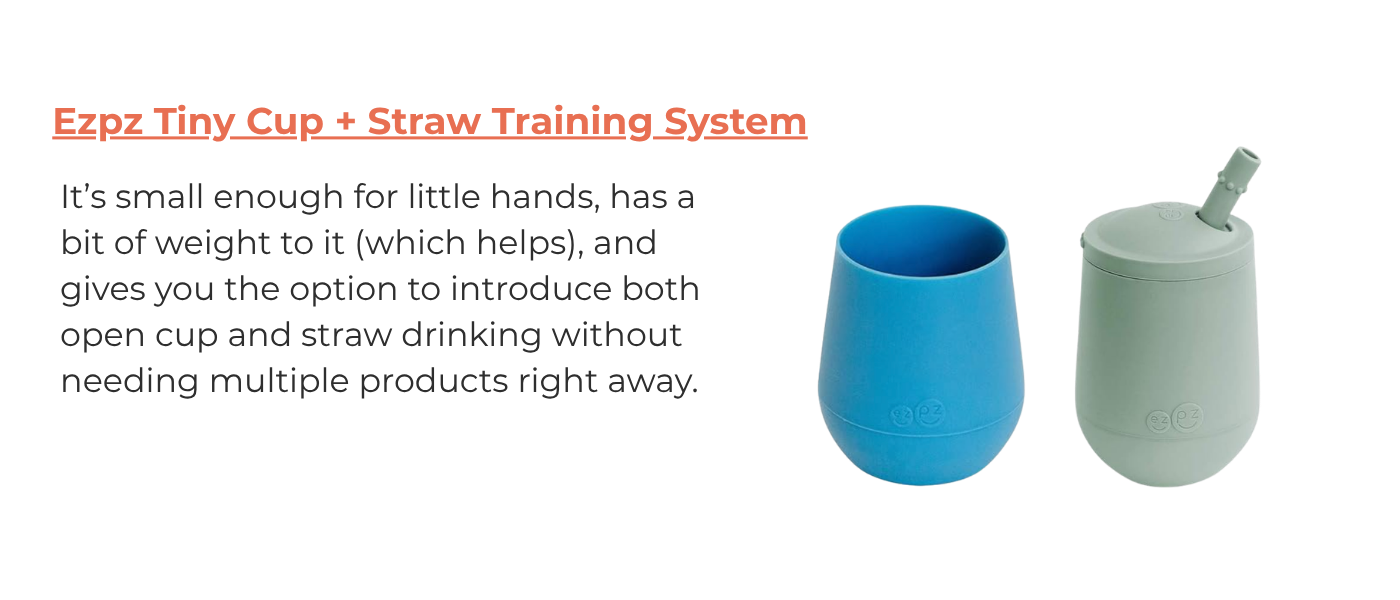
My favorite open cup that also transitions into a straw cup is the EzPz Tiny Cup + Straw
This post contains affiliate links, which means I may earn a small commission if you purchase through my links—at no extra cost to you. I only recommend products I actually use and trust.
Straw Cups: Worth Introducing Early
Straw drinking supports: oral motor development, lip and cheek strength, coordination that carries over into feeding and speech. You want to aim for a soft silicone-type straw when possible as babies’ mouths are developing and soft spout is ideal. But here’s the part that trips a lot of parents up:
Straw drinking is not instinctive for many babies.
If your baby “isn’t getting it,” that doesn’t mean anything is wrong—you just need the right tool to help them learn.
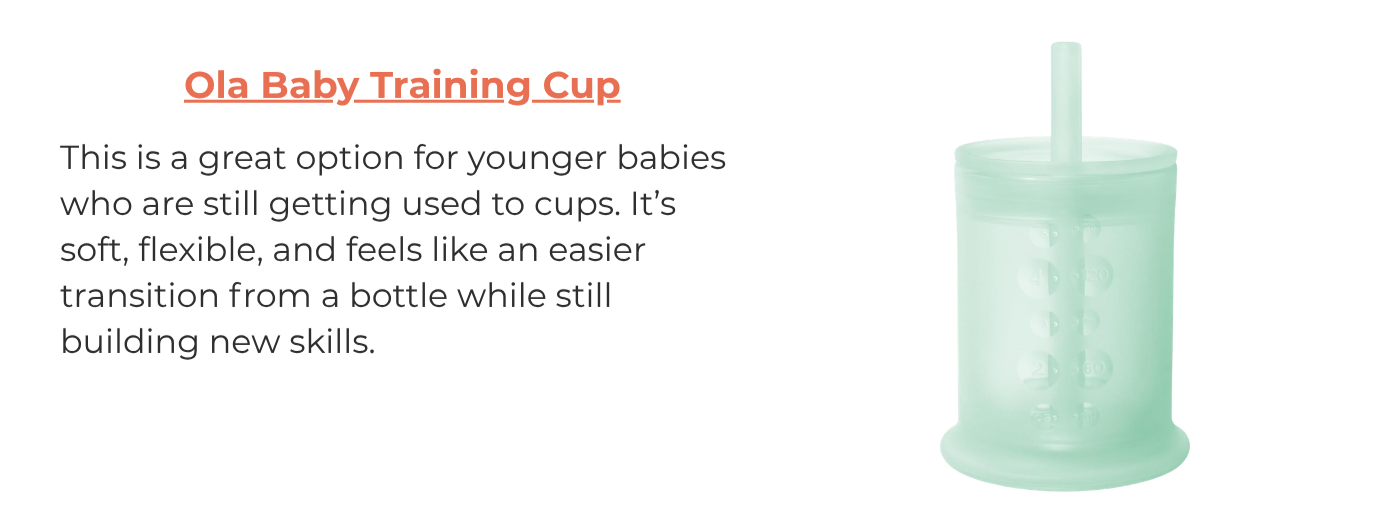
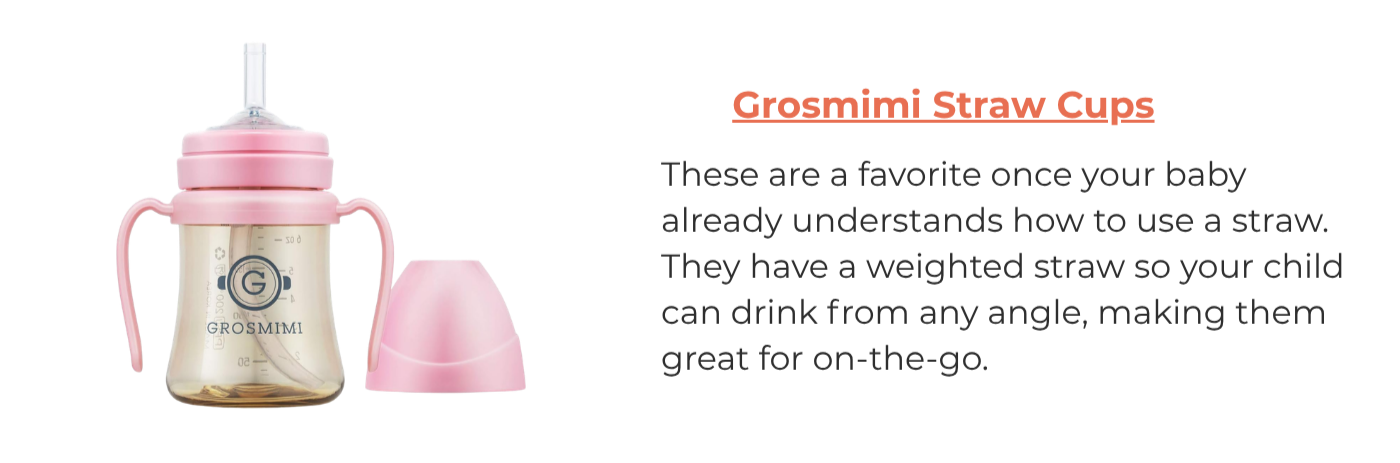
Best Cups for Learning Straw Skills
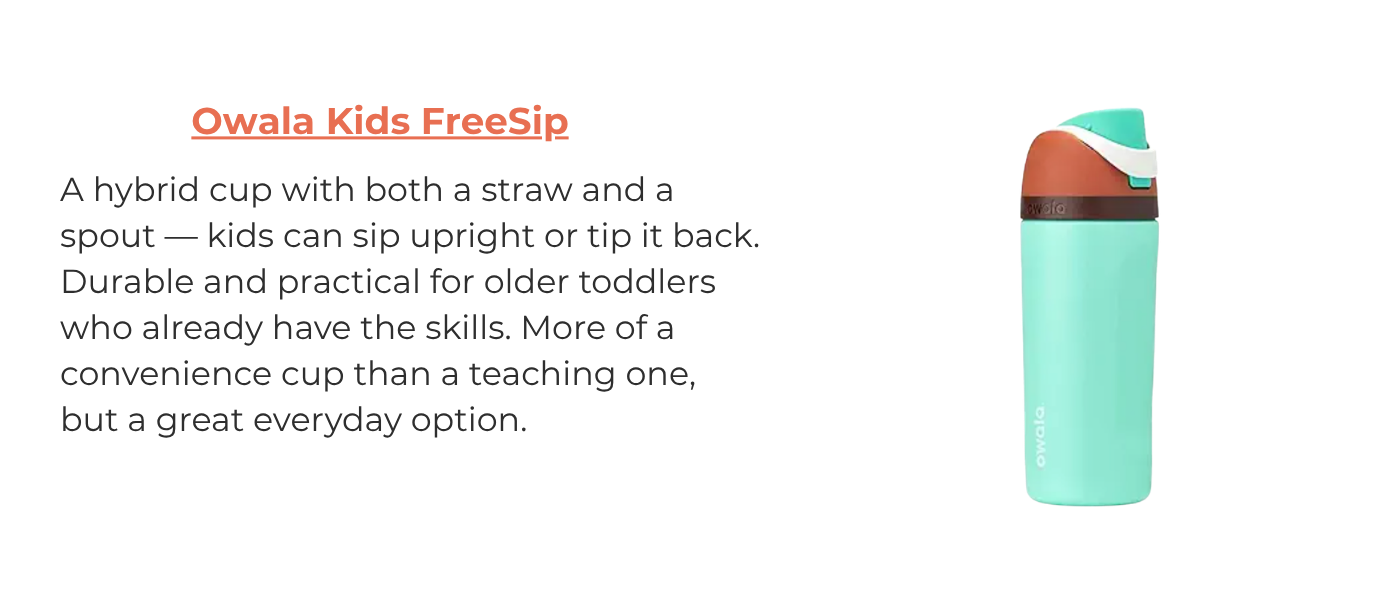
Once the Skill Is There: “Real-Life” Cups
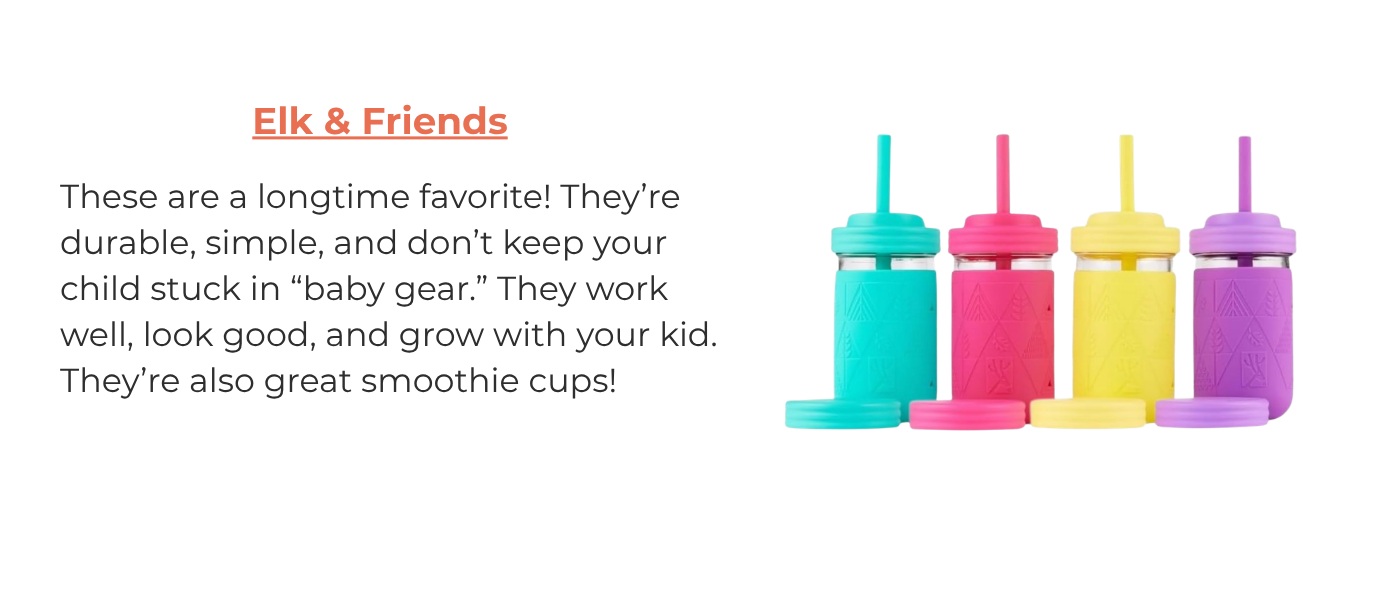
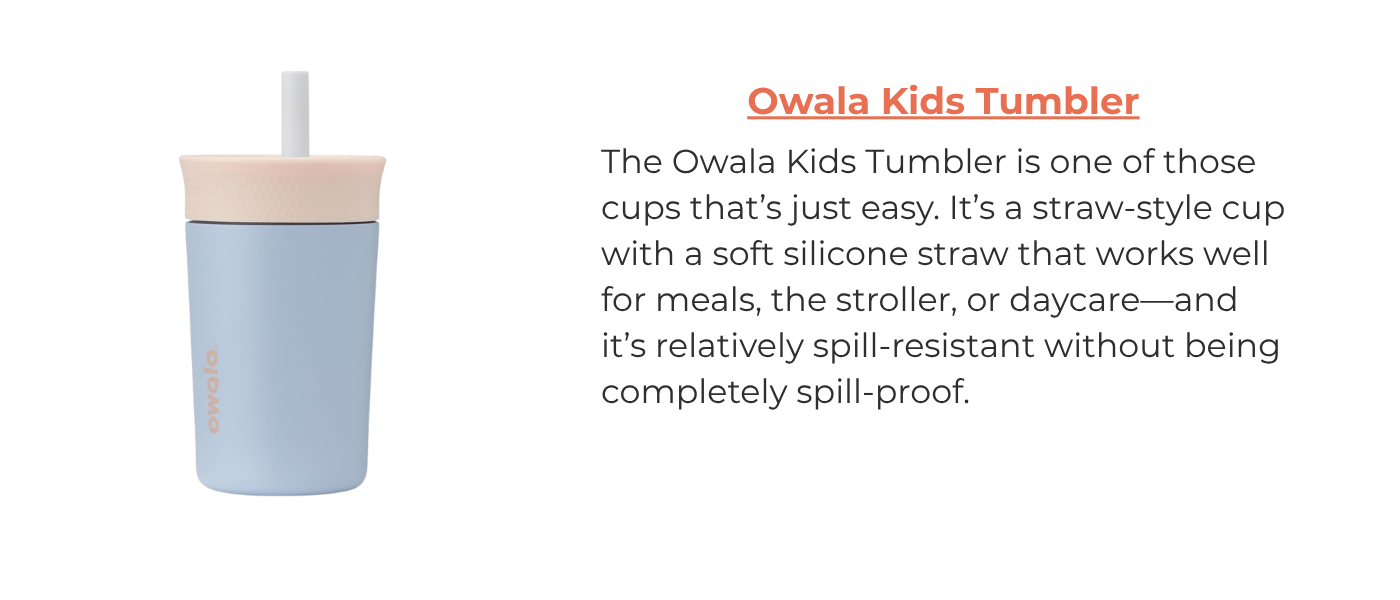
At a certain point, you’re not teaching the skill anymore—you’re just living your life. That’s when I like to move away from “training cups” and toward cups that feel more like what the rest of the family uses.
A Quick Reality Check About “Spill-Proof” Cups
I get the appeal of wanting something that doesn’t spill. But if your main goal is “no mess,” you’ll often end up choosing cups that limit your child’s ability to actually learn. Spills are part of the process. They don’t mean your child isn’t ready. They don’t mean you chose the wrong cup. They mean your child is practicing.
Keep It Simple
You do not need a cabinet full of cups. Start with:
one open cup (like the Ezpz tiny cup)
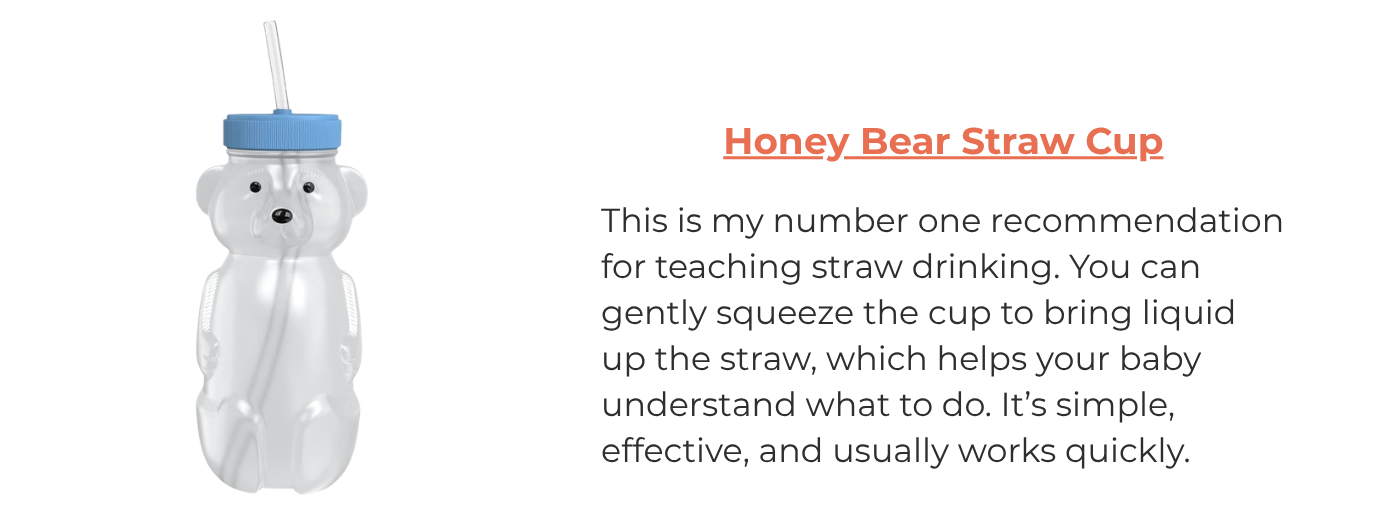
one straw trainer (like the Honey Bear or Ola Baby)
That’s it. You can always add in other options later as your child grows and your needs change.
The Bottom Line
The best cup isn’t about the brand. It’s the one that supports your child’s skill-building, fits into your real life, and doesn’t turn drinking into a source of pressure or difficulty.
Because this isn’t about raising a kid who uses the “right” cup. It’s about raising a kid who feels confident eating and drinking—and trusts their body.
Want More Support with Solids, Cups, and Feeding (Without the Overwhelm)?
Inside my Fun with Solids guide, I walk you through:
how to introduce water and cups step-by-step
what’s normal (and what’s not)
how to build skills without pressure or second-guessing